Process type
Honey
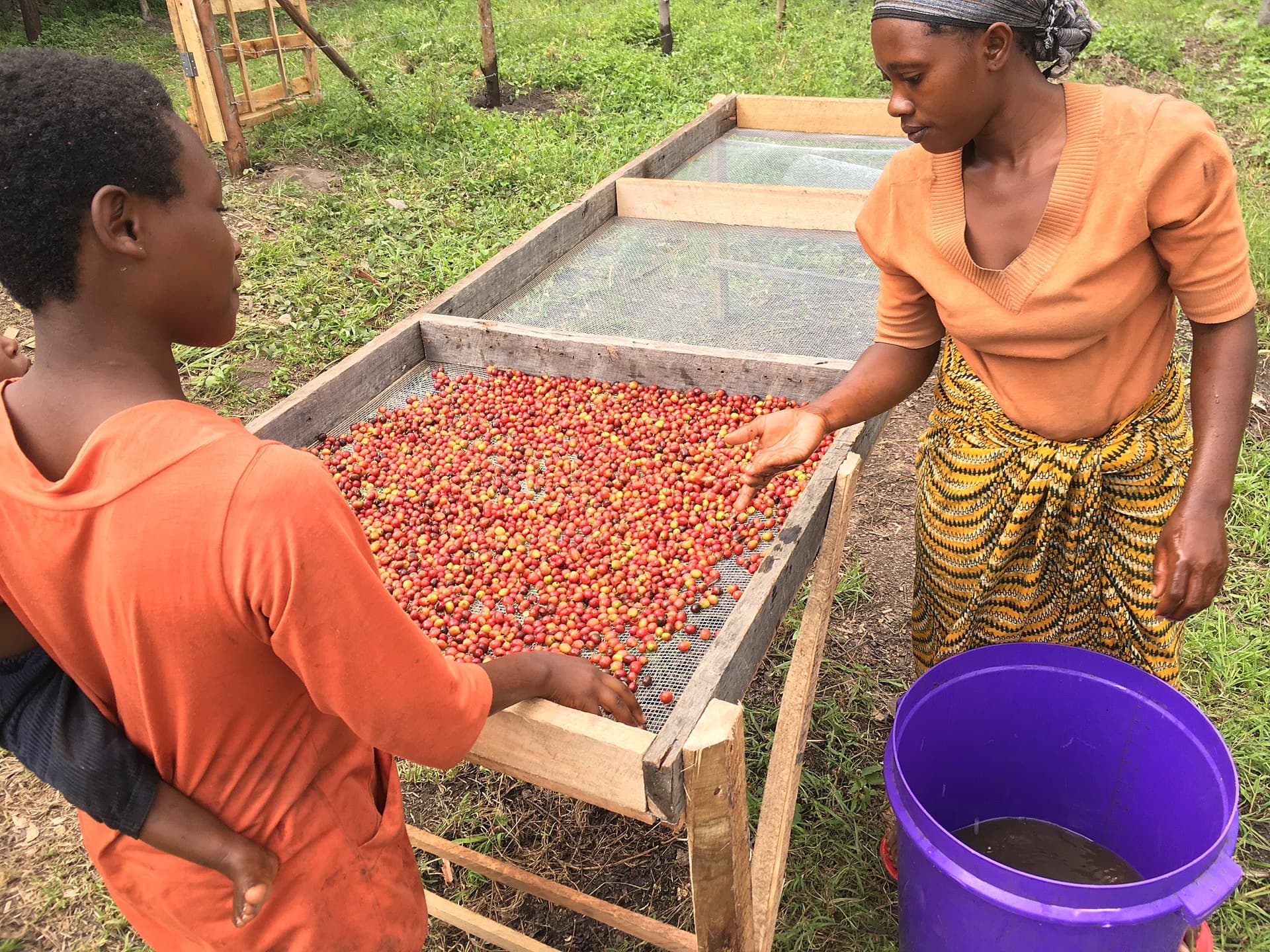
A middle path: the skin is removed but some sticky mucilage ("honey") is left on the bean during drying. White, yellow, red and black honey describe how much fruit stays on and how slowly it dries.
How it tastes
Rounded body, syrupy sweetness, soft acidity.
The story
The honey process is the youngest of the traditional family. Brazil developed its ancestor, the pulped natural, in the 1990s as a way to get natural-style sweetness without the risk of drying whole cherries in humid weather. Costa Rican producers picked up the idea in the 2000s, refined it, and gave it the name miel, honey, after the sticky layer of mucilage left clinging to the bean while it dries. No honey is involved; the bean just looks and feels like it.
The method spread with Costa Rica's micromill revolution, when smallholder families began processing their own harvests instead of delivering cherries to big cooperatives. Controlling exactly how much mucilage stays on, and how fast it dries, gave them a spectrum of styles now known by colour: white and yellow honeys dry quickly and cup closer to washed; red and black honeys keep more fruit and dry slowly, drifting toward natural territory. It is now a staple across Central America.
Coffees of this type
- #007Tolima Planadas HoneyTolima · Colombia
- #012Sierra Nevada Honey TypicaSierra Nevada de Santa Marta · Colombia
- #017Fazenda da Lagoa Yellow BourbonSul de Minas · Brazil
- #022Matas de Minas Red Catuaí HoneyMatas de Minas · Brazil
- #036San Martin Honey CatuaiSan Martin · Peru
- #047Toraja Sapan Honey CatimorToraja (Sulawesi) · Indonesia