Guide
How coffee gets roasted
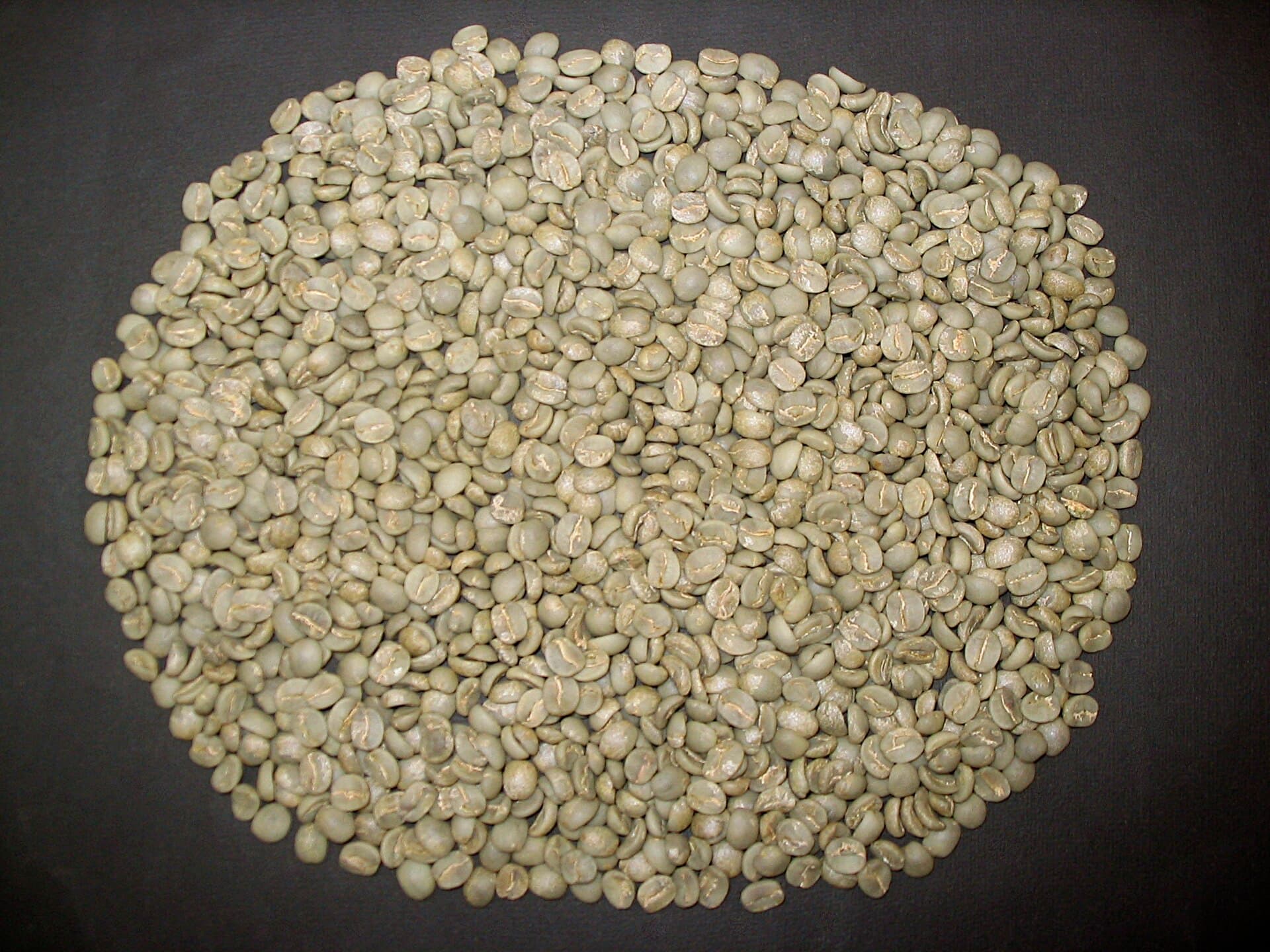
Green coffee is grassy, hard and almost flavourless. Everything you love in a cup, the caramel sweetness, the fruit, the chocolate, the crackle of aroma when you tear open a fresh bag, gets built during roasting. It is a short, intense transformation, usually over in ten to fifteen minutes, and it decides more about flavour than almost any other step in coffee's journey from tree to cup.
What roasting actually is
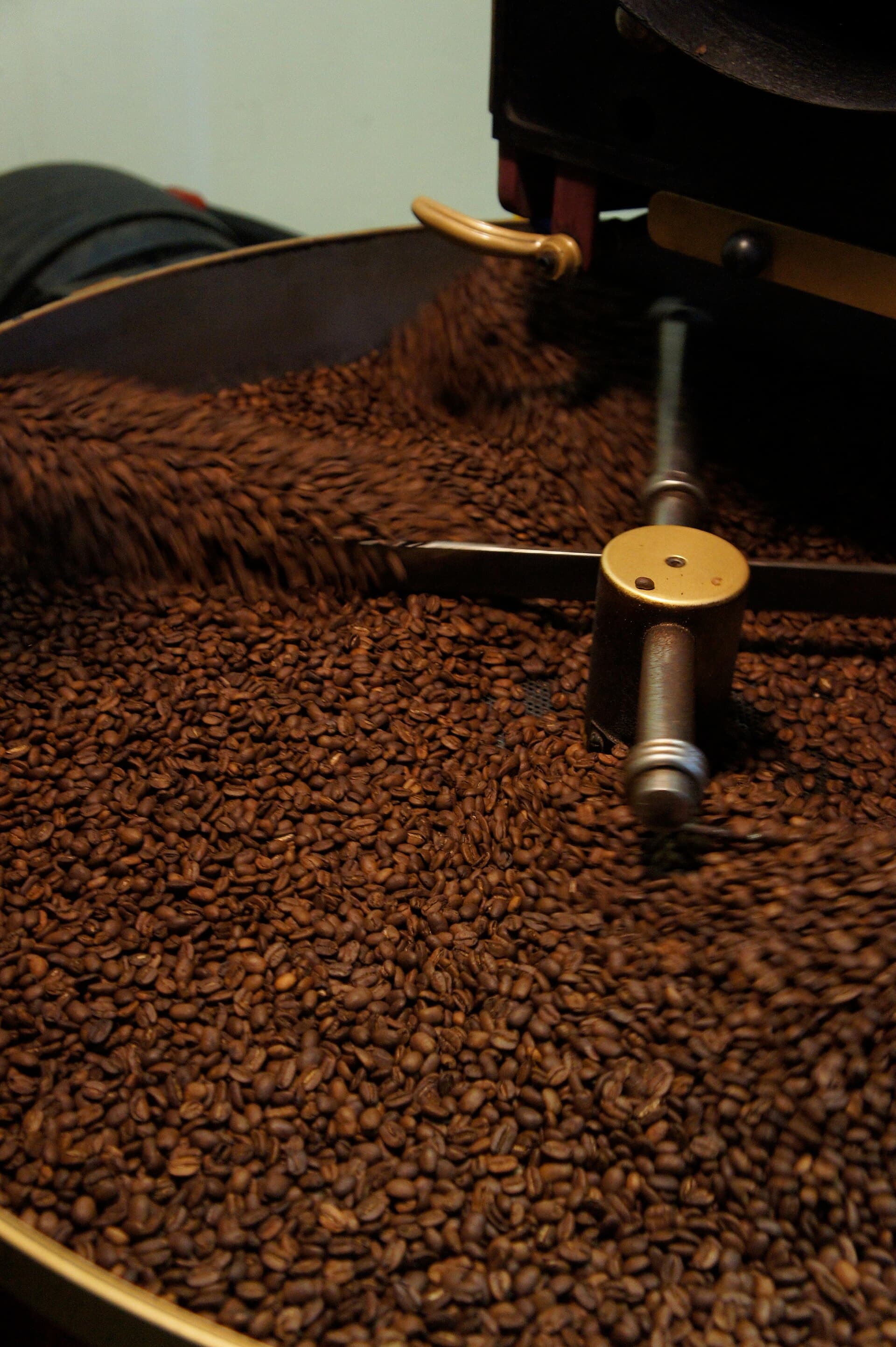
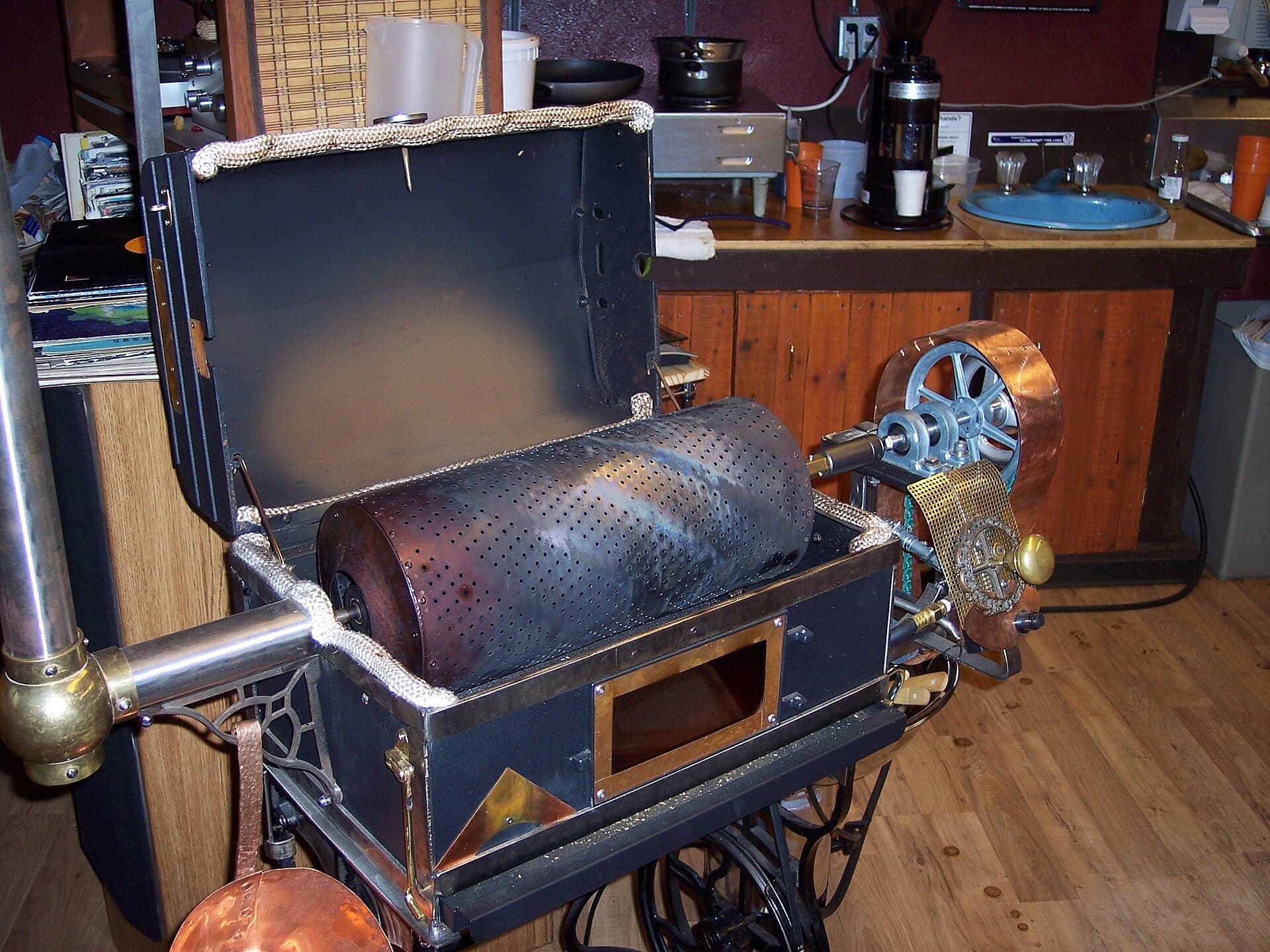
Green coffee beans are dense, pale and smell faintly of hay or fresh cut grass. Roasting is what turns that raw seed into something aromatic and soluble enough to brew. Inside a roaster, beans tumble in hot air or against a heated metal drum, usually somewhere between 180 and 240 degrees Celsius, and over the space of several minutes hundreds of chemical reactions fire off in sequence.
Two reactions do most of the heavy lifting. The Maillard reaction, the same one that browns bread crust and a seared steak, is a reaction between amino acids and sugars that produces hundreds of new aromatic compounds and turns the bean from green to tan to brown. Caramelisation kicks in a little later and a little hotter, breaking sugars down directly and adding the deeper, sweeter, sometimes bittersweet notes you taste in a well developed roast.
Alongside all this, the bean is losing moisture. Green coffee holds around 10 to 12 per cent moisture by weight, and by the end of roasting that has dropped to around 1 to 3 per cent. As water flashes off as steam, the bean's internal structure changes too: cell walls soften and expand, carbon dioxide builds up inside the bean, and the whole thing grows in size while losing weight, typically 12 to 20 per cent of its original mass depending on how dark the roast goes.
The roast curve, heat and airflow
Roasters talk about "the curve" the way a sailor talks about the wind. The roast curve is simply a graph of bean temperature against time, and shaping it well is most of the skill in roasting. A batch typically moves through three broad phases: a drying phase where the beans shed most of their moisture and turn from green to yellow, a browning phase where Maillard reactions dominate and the beans start smelling like toast, and a development phase after first crack where the roaster decides how far to push flavour and colour.
The two levers a roaster has are heat and airflow, applied over time. Heat comes from a gas burner or electric element and is usually adjusted in stages: a hot start to get the batch moving, then measured reductions so the outside of the bean does not scorch before the inside catches up. Airflow controls how much hot air moves through the drum, carrying away chaff and smoke, evening out the heat the beans experience, and influencing how fast flavour compounds develop versus how fast the beans simply char.
Roasters also watch the rate of rise, how many degrees per minute the bean temperature is climbing. A curve that rises too fast can leave the inside of the bean underdeveloped while the outside scorches. One that flattens out too much can stall the reactions that build sweetness, leaving the coffee tasting flat and baked. Good roasting is a series of small, deliberate corrections that keep that curve smooth and trending the right way.
First crack and second crack
Partway through roasting, usually somewhere in the 195 to 205 degree range, the beans start to crackle audibly, a sound roasters call first crack. It is the sound of built up steam and carbon dioxide physically fracturing the bean's structure from the inside, a bit like popcorn popping, though quieter and more staggered. First crack is the single most important, universally recognised reference point in the whole roast: almost every named roast level is described in relation to how long ago first crack finished.
Beans are technically drinkable from the moment first crack begins, though right at that point the flavour is usually thin, sour and underdeveloped, closer to raw grain than coffee. Roasters generally let the batch run on for at least a minute or two past the end of first crack before calling it a light roast.
If the roast keeps climbing, a second, quieter and more rapid crackling begins around 224 to 230 degrees, known as second crack. This is caused by the bean's cell structure breaking down further and oils beginning to migrate to the surface. Coffee taken past second crack moves firmly into dark roast territory, where the taste of the roast itself, smoky, bittersweet, sometimes resinous, starts to override the more delicate flavours the bean picked up from its origin and processing.
The roast spectrum, light to dark
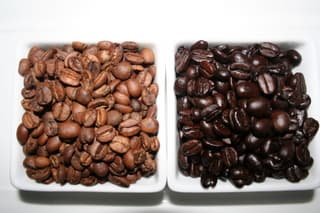
Every roast sits somewhere on a spectrum from light to dark, and where it sits changes almost everything about how the coffee tastes. Roasting is not just about colour, it is a trade off: the longer and hotter a bean is roasted, the more its own origin character is replaced by flavours created by the roasting process itself.
Light roasts are pulled soon after first crack. They tend to show brighter acidity, often described as crisp, citrusy or winey, along with a lighter body and more of the bean's original character: the floral lift of a washed Ethiopian, the berry sweetness of a natural process coffee, the clean sweetness of a good washed Central American. Because so little sugar has been caramelised, light roasts can taste sour or grassy if the roast was rushed, which is why development time matters so much at this end of the spectrum.
Medium roasts sit in the middle ground most people reach for as an everyday coffee. Acidity softens into something rounder, sweetness builds as caramelisation properly kicks in, and body thickens slightly. This is often considered the roast level that best balances origin character with the sweetness and complexity the roast itself contributes.
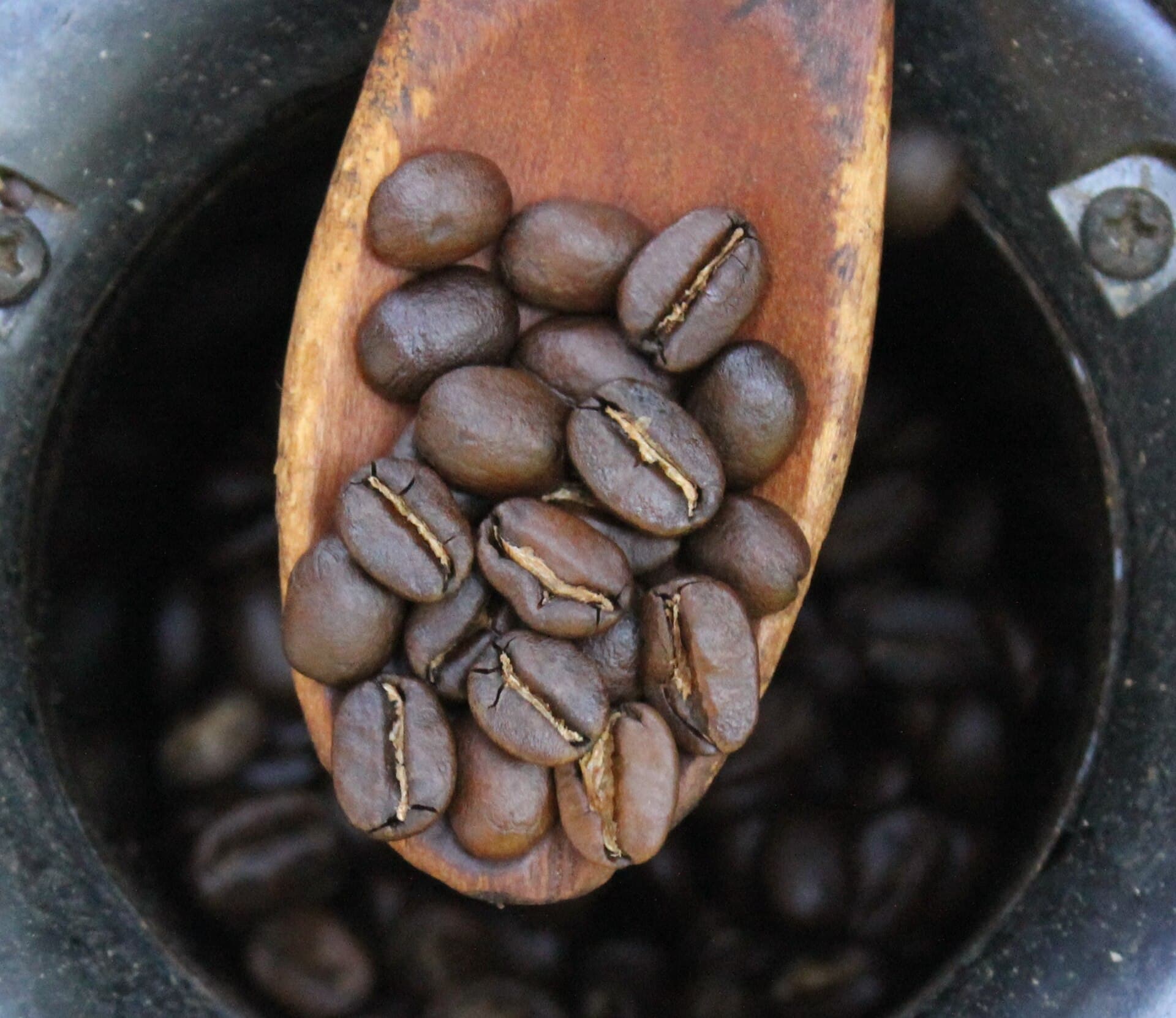
Dark roasts push well past first crack, sometimes into second crack. Acidity drops away almost entirely, body becomes heavier and syrupy, and flavours shift towards bittersweet, smoky, toasted or even charred notes depending how far the roast goes. Origin character fades the darker a roast gets, which is why dark roasted coffees from very different countries can end up tasting more like each other than they do like their own lighter roasted versions.
Named roast levels
Roasters use a set of traditional names, mostly inherited from the American specialty coffee scene, to describe specific points along the roast spectrum. They are not perfectly standardised between roasters, but they give a useful shared vocabulary.
Cinnamon roast is very light, stopped just after first crack begins. It is pale, high in acidity and rarely used commercially because the beans are usually underdeveloped, tasting grassy or cereal like.
City roast is a common light to light medium roast, taken a short way past the end of first crack. It favours acidity and origin character and is a popular choice for filter coffee and cupping, where showing off a bean's natural flavour matters most.
Full City roast sits a little further on, right at the edge of second crack or just before it. Acidity has mellowed, sweetness and body have both increased, and this is often considered a versatile middle ground that works well across both filter and espresso.
Vienna roast pushes into the early stages of second crack. Oils begin to appear on the bean's surface, body becomes noticeably heavier, and a light smokiness starts to show alongside caramel and dark sugar notes.
French roast continues further into second crack. The beans turn a dark, oily brown, acidity is essentially gone, and the flavour is dominated by bittersweet, smoky, almost charcoal like notes.
Italian roast is the darkest roast level in common use, taken right to the edge of what beans can handle before they turn to carbon. Beans are very dark, heavily oiled, and the flavour is almost entirely roast derived: smoky, bitter and heavy, with little left of the origin's own character.
Development time and why it matters
Development time refers to the portion of the roast that happens after first crack begins, right up until the beans are dropped out of the roaster and cooled. It is usually expressed as a percentage of the total roast time, and it is one of the main things separating a well judged roast from a rushed or overcooked one.
If development time is too short, the sugars and acids inside the bean have not had enough time to convert and balance out. The result is a coffee that tastes sour, grassy or vegetal, sometimes with a raw, peanut like note, because the Maillard and caramelisation reactions were cut off before they finished their job. This is one of the most common faults in home roasting and in commercial roasts pushed through too quickly to save time.
If development time runs too long, especially once the roast tips past second crack, the bean's own sugars begin to burn rather than caramelise. This produces the flat, ashy, bitter flavours associated with over-roasted or stale tasting dark coffee, and it can strip out enough of the bean's original oils and sugars that no amount of careful brewing will bring the flavour back. Judging development time well, not just hitting a target colour, is one of the clearest marks of a skilled roaster.
How roast interacts with origin and process
A roaster is always making a decision about how much of a coffee's own story to let through. Where a coffee was grown, its variety, and how it was processed after picking, washed, natural or honey, all leave distinct fingerprints on flavour, and a light roast is the surest way to let those fingerprints show. A washed Kenyan roasted light might show blackcurrant and tomato like acidity, a natural Ethiopian might taste of strawberries and jasmine, and a washed Colombian might come through clean, sweet and citrusy. These differences are exactly what specialty roasters are chasing when they roast light.
Push the roast darker and those distinctions start to blur. The compounds created by roasting itself, smoky, toasted, caramelised, become louder than the compounds the bean brought with it from the farm. A dark roasted natural Ethiopian and a dark roasted washed Brazilian can end up tasting far more alike than either does compared with its own lighter roasted version, simply because the roast has become the dominant flavour rather than the origin.
Neither approach is wrong, they just serve different goals. Light roasting is about transparency, showing a coffee's origin as clearly as possible. Darker roasting is about consistency and a familiar, comforting flavour profile, which is part of why many traditional espresso blends, built from beans sourced from several origins, are roasted a touch darker: it smooths out variation between origins and between harvests, giving a reliably similar cup year round.
How to taste and judge a roast
You do not need professional training to start judging a roast, just a bit of attention and a consistent method. Start with your eyes: an evenly coloured batch of beans, free of dark scorch marks or pale unroasted patches, is a good early sign of a well controlled roast. Whether the surface shows oil or not is mostly a function of how dark the roast is and how fresh the beans are, oil migrates to the surface as roast level and time both increase, so it is not on its own a mark of quality.
Smell comes next. Freshly roasted, freshly ground coffee should smell vivid and specific, not flat or dusty. Cupping, the method professional tasters use, involves smelling the dry grounds, then again once hot water is poured over them, noting whether the aroma is sweet, floral, nutty, fruity or more roasty and smoky.
When you taste, try to notice acidity first, that bright, lively quality that makes a coffee feel juicy rather than flat, then sweetness, then body, the weight and texture of the coffee in your mouth, and finally the aftertaste, how the flavour lingers or fades once you swallow. A well roasted coffee should taste balanced for its roast level: a light roast should be bright and clean rather than sour, a dark roast should be rich and bittersweet rather than simply burnt. If a coffee tastes papery, hollow or vegetal, that often points to underdevelopment. If it tastes ashy, flat or aggressively bitter with no sweetness underneath, that usually points to a roast pushed too far or too fast.
Freshness, degassing and storage
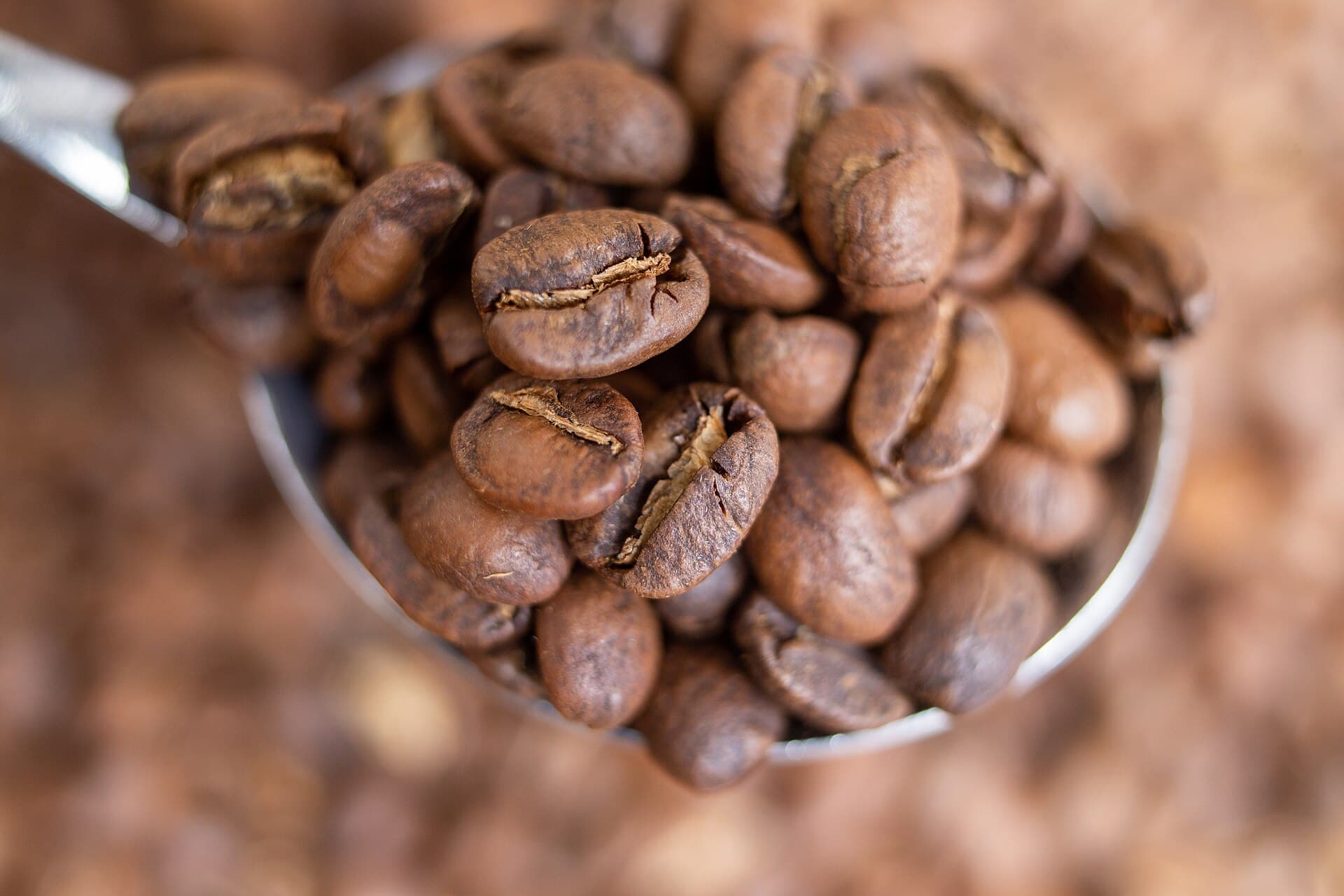
Roasting does not just change flavour, it also starts a clock. The moment beans come out of the roaster, carbon dioxide trapped inside them from the roasting process begins slowly escaping, a process called degassing. This is why freshly roasted beans can look like they are gently fizzing when ground, and why a bag of beans left sealed will visibly puff up as gas builds inside it.
Coffee is rarely at its best in the first day or two after roasting. Too much carbon dioxide in the beans can interfere with even extraction, pushing water away from the coffee unevenly and sometimes producing a sharp, slightly sour edge, especially in espresso. Most specialty roasters suggest resting beans for somewhere between four days and two weeks after roasting before brewing, with espresso generally wanting a little longer to rest than filter.
After that resting window, flavour is at its peak for a limited stretch before it starts to fade, usually a few weeks for whole beans stored well, and only a matter of minutes once ground, since grinding exposes far more surface area to oxygen. Keep beans in an airtight container, away from light, heat and moisture, and grind only what you need just before brewing. Buying smaller amounts more often, rather than a large bag that sits half used for a month, is one of the simplest ways to keep your favourite coffee tasting the way the roaster actually intended.
Roasting for espresso versus filter
Espresso and filter coffee ask different things of a roast, which is why the same beans are sometimes roasted two different ways depending on how they will be brewed. Espresso forces hot water through very finely ground coffee under pressure, concentrating flavour, acidity and bitterness all at once. A roast intended for espresso is often taken a touch darker and developed a little longer than the same coffee would be for filter, softening acidity and building body and sweetness so the shot feels rounded rather than sharp or sour under that pressure.
Filter brewing, whether that is a pour over, batch brew or plunger, uses a coarser grind and a gentler, gravity fed extraction. This gives acidity and delicate aromatics more room to shine without being amplified into sharpness, which is why filter roasts are often taken lighter, closer to City or Full City, to preserve the brighter, more origin driven flavours that a longer, darker roast would smooth away.
None of this is a strict rule. Some cafes run a single roast across both methods and simply adjust grind size, dose and brew time to compensate, and plenty of specialty roasters now roast even espresso a little lighter than tradition suggests, chasing more clarity and origin character in the cup. But understanding why the two methods historically pulled roasting in different directions makes it easier to taste what a roaster was going for, and to ask for what actually suits the way you like to brew at home.